
Tenun Sustainability in the Age of AI: Weaving the Future

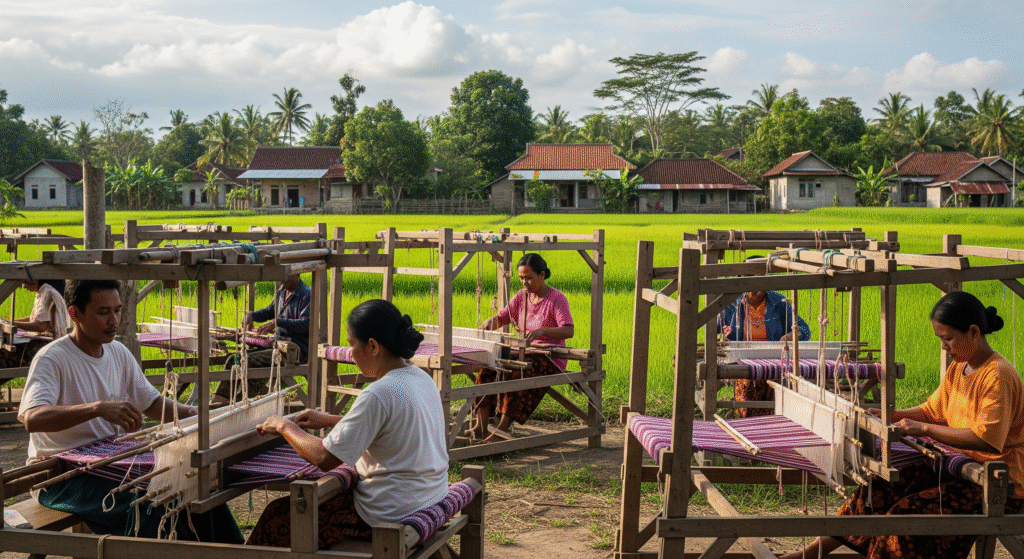
Indonesia is rich in textile traditions, with iconic crafts like Batik from Yogyakarta and Songket from Palembang. However, Troso weaving holds a unique place due to its intricate double-weaving technique, bold colors, and symbolic patterns.
What truly sets Troso apart, however, is the communal aspect of its production. Unlike many crafts, it is not just the work of an individual, but the result of a collective effort.
“Weaving is like a dance between your hands and your heart,” says Bu Lestari, a lifelong weaver who learned the craft from her mother.
As global fashion turns to automation, the artisans of Troso continue to work by hand, passing down their skills to new generations. In a world moving fast, Troso stands as a reminder of how tradition and craftsmanship can endure.
From Near Extinction to Global Recognition
Not long ago, Tenun Troso was on the brink of disappearing. Cheap mass-produced textiles flooded the market, and younger generations sought jobs in the cities, leaving behind the village’s traditional skills. However, a shift began when the community recognized the value of preserving their cultural heritage.
Jepara Weaving House played a pivotal role in this revival, introducing storytelling, design innovation, and skill-building workshops. They connected Troso’s weaving community with a broader audience, reigniting pride and purpose in the craft.
This movement is part of a larger national push supported by cultural institutions and NGOs, as highlighted by The Jakarta Post, to preserve Indonesia’s diverse crafts.
Youth-Led Revival
One of the most exciting aspects of Troso’s revival is the involvement of youth. In recent years, young designers, students, and digital creators have embraced the craft, combining traditional techniques with modern fashion.
“I used to think weaving was for older generations, but after seeing how Troso patterns can be used for jackets or even digital designs, I understood its potential,” says Diah, a 23-year-old fashion student from Semarang.
The community is now experimenting with plant-based dyes, recycled yarn, and minimalist color schemes, making Troso textiles appealing to a new, eco-conscious market. This innovative spirit is aligned with the global slow fashion movement, which emphasizes sustainability and transparency in the fashion industry.
Women Behind the Looms
In Troso, women play a central role in preserving the weaving tradition. Many of the artisans are mothers and grandmothers, passing down their knowledge to younger generations.
“When someone wears my cloth in another country, it feels like a piece of me travels with them,” says Bu Nanik, who runs a workshop with 12 women.
Thanks to platforms like Etsy and Tokopedia, these women are no longer just artisans—they are small business owners, gaining financial independence and empowering their families.
Culture Meets Tourism
Jepara is traditionally known for its wood carving, but now Troso is gaining recognition as a destination for cultural tourism. Visitors can explore the weaving process firsthand, participate in workshops, and even purchase custom-made pieces.
The Jepara Weaving House Experience Program offers immersive tours that introduce tourists to the local weaving culture. This sustainable tourism initiative aligns with Indonesia’s Ministry of Tourism and Creative Economy efforts to promote community-based tourism and local craftsmanship.
Digital Storytelling, Global Impact
As technology and tradition merge, digital platforms have become key to expanding Troso’s reach beyond Jepara. The Jepara Weaving House website features educational content, weaving tutorials, and an online shop to connect with buyers around the world.
In recent years, collaborations with ethical brands in Japan and Canada have brought Troso fabrics into global fashion collections. Some pieces have even been showcased at events like Jakarta Fashion Week, spotlighting Indonesia’s cultural craftsmanship on an international stage.
If you’re interested in discovering more about sustainable textile sourcing or collaborating with local artisans, check out IndoThread Collective, a platform that connects global designers with ethical artisans like those in Troso.
Threads That Remember
The resurgence of Troso weaving is about more than just preserving an art form—it’s about identity, memory, and pride. Weaving in Troso serves as a reminder of the village’s roots, ensuring that the culture lives on in the hands of future generations.
“To weave is to remember,” goes a local Javanese saying. And in Troso, every thread tells a story.